
I don’t know about you guys, but it’s been HOT and MUGGY this summer. Thank goodness it cools down at night and that ocean breeze is a godsend! Not only do we as equine workers, riders, and trainers need to stay hydrated, but our horses do too. Hot weather can be dangerous for horses because they cool themselves mostly by sweating, and heat plus humidity can make that cooling system less effective. Good summer care is about protecting horses from heat load, supporting hydration, and planning work around the safest times of day. A horse can overheat during turnout, transport, or exercise, especially if it is not acclimated to hot weather. Heat stress can progress to heat stroke, so early prevention is much easier than treatment later.
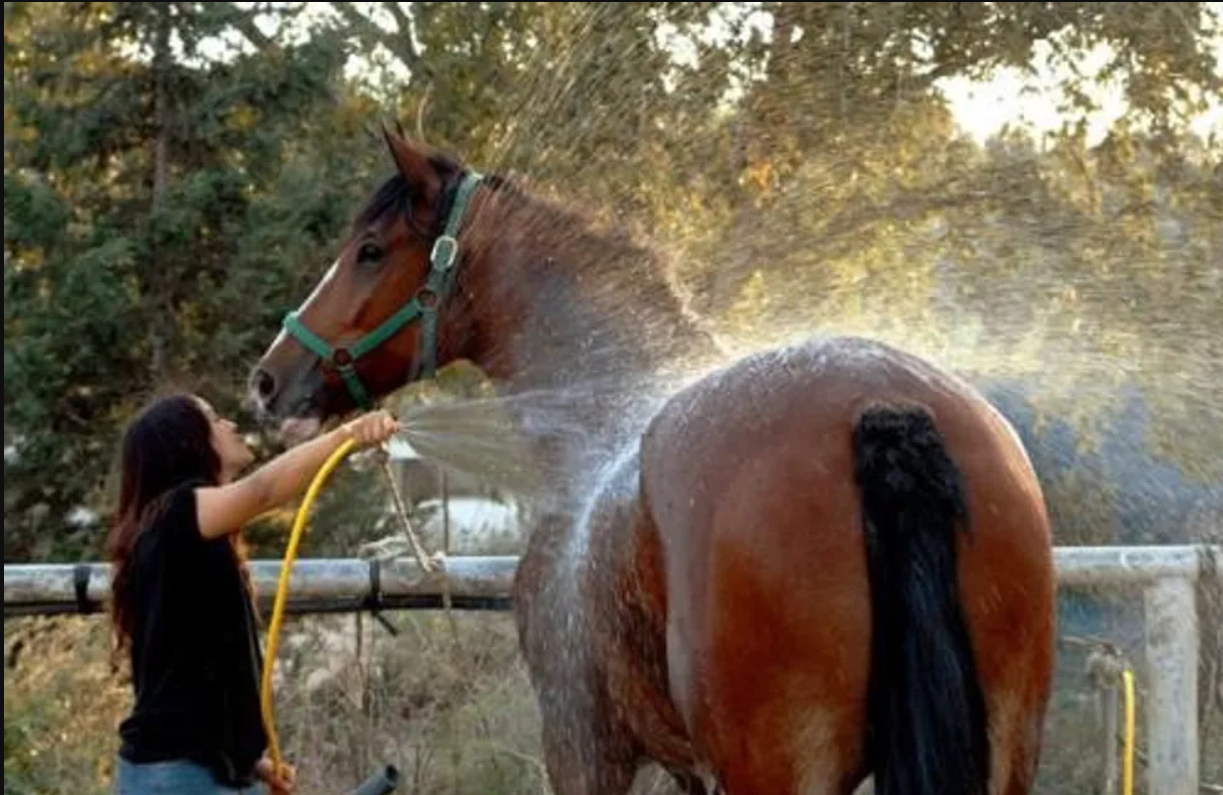
Try to schedule turnout and exercise for the early morning or evening, when temperatures are lower and the horse has less heat to shed. Avoid strenuous work during the middle of the day and be extra cautious when temperatures plus humidity are high. One common guideline is to avoid riding when that combined number is over 150, especially if the horse is not acclimated. After work, cool the horse promptly with cool water. Repeated hosing or sponge and scrape cooling can help bring body temperature down faster, especially when you focus on large muscle groups like the neck, shoulders, back, chest, and hindquarters.
Hot weather increases fluid and electrolyte loss and more so in horses who sweat heavily. Many horse owners add extra salt or electrolytes when appropriate, but this should be done with care if a horse has a medical condition. It can also help to keep water buckets and troughs clean, so horses actually want to drink. Soaking hay or offering other moisture rich feed options help support hydration as well. As fresh water is a top priority, so is shade and airflow. Horses that stand in stalls with low metal roofs are often already very hot and sweaty prior to getting ready for exercise. It can be deceiving, standing in a barn isle with a breeze and then walking into a stall where the temperature drastically changes. Fans and vented stall doors can help tremendously.
Take notice if your horse has heavy sweating, rapid breathing, weakness, lethargy, sticky gums, poor recovery after exercise, stumbling, or a horse that is not sweating normally. More serious warning signs include disorientation, collapse, lack of interest in drinking, and abnormal behavior. If you suspect heat stroke, stop exercise immediately, move the horse to shade, begin cooling, and call your veterinarian right away. This is an emergency.
In the end, caring for horses in hot weather comes down to awareness, consistency, and proactive management. By prioritizing hydration, providing shade and airflow, and adjusting your riding schedule, you not only protect your horse from heat stress but also support long term health and performance. As someone who works closely with horses, you know how quickly small changes can make a big difference. Stay observant and trust what your horse is telling you and make heat management part of your daily routine during the summer months. A little extra care now goes a long way in keeping your horse comfortable, resilient, and thriving in the heat.


